
How to Hire and Train the Perfect PG Caretaker
In a PG setup, infrastructure gets noticed first, but operations define whether tenants stay.
And operations, in most cases, are only as strong as the person managing them daily.
The caretaker is not just a support role. They are the execution layer of your entire system. Every delay, every complaint, every moment of friction or smoothness in tenant experience, flows through them. Yet, despite this, most PG operators continue to hire caretakers informally, train them inconsistently, and evaluate them subjectively.
This creates a pattern:
You fix the same problems repeatedly, without addressing the source.
Hiring and training a caretaker is not about filling a role. It is about building operational reliability on the ground.
Why the Caretaker Role Directly Impacts Your Revenue
At first glance, caretakers appear to handle routine responsibilities, monitoring the property, coordinating maintenance, and responding to tenants. But their real impact is far deeper.
They influence:
- How quickly issues are resolved, which directly affects tenant satisfaction and retention
- How consistently rules are followed, which impacts discipline and property condition
- How professionally communication is handled, which shapes tenant perception
A well-trained caretaker reduces friction before it escalates. A poorly trained one amplifies it.
Over time, this translates into:
- Higher retention vs constant churn
- Stable operations vs daily firefighting
- Predictable performance vs reactive management
The difference between a PG that “runs smoothly” and one that constantly struggles is rarely infrastructure. It is almost always execution.
Hiring the Right Caretaker: Moving Beyond Informal Decisions
Most hiring mistakes happen at the very first step, unclear expectations.
Caretakers are often hired based on availability, basic experience, or referrals. While these may seem practical, they do not guarantee performance.
A more structured hiring approach focuses on evaluating the right traits, not just past roles.
What You Should Actually Look For
Instead of asking “Have you worked in a PG before?”, shift the focus to capability.
- Communication clarity and tone: The candidate should be able to explain situations calmly, listen actively, and avoid escalation through poor wording or attitude
- Reliability in routine tasks: Consistency matters more than intensity; someone who performs daily tasks predictably is far more valuable than someone who works inconsistently
- Basic process-following ability: They should be comfortable following instructions, maintaining simple records, and working within defined systems
- Ownership mindset: When an issue arises, they should attempt resolution first, not deflect responsibility immediately
These traits determine whether the caretaker will support your system or constantly require supervision.
Defining the Role Clearly: The Importance of a Strong Job Description
One of the biggest operational gaps in PGs is vague responsibility.
Caretakers are often told to “manage the property,” which leads to confusion, inconsistency, and misaligned expectations.
A structured job description creates clarity, for both you and the caretaker.
A Well-Defined Role Should Include:
- Daily operational responsibilities: Monitoring rooms, ensuring cleanliness, checking utilities, and maintaining order across common areas
- Tenant interaction protocols: Responding to queries, handling complaints, and maintaining a professional tone at all times
- Issue management workflow: Recording complaints, coordinating with vendors, and ensuring closure within defined timelines
- Escalation guidelines: Understanding what needs to be handled independently and what requires reporting to the owner or manager
When responsibilities are clearly defined, performance becomes measurable. Without this, accountability becomes subjective.
Training SOPs: Turning a Hire Into a System-Aligned Performer
Even the right hire will fail without structured training.
The assumption that caretakers will “learn on the job” leads to inconsistent outcomes. Each caretaker develops their own way of working, which breaks standardization.
Training is not about instruction. It is about alignment.
What a Structured Training System Should Cover
A strong training framework ensures that every caretaker operates in the same way, regardless of property or experience.
- Property orientation and systems understanding: The caretaker should know the layout, utilities, common issues, and how different parts of the property function together
- Standard operating procedures (SOPs): Clear processes for handling complaints, coordinating maintenance, managing tenant interactions, and maintaining records
- Communication guidelines: How to respond to tenants, handle difficult conversations, and provide updates without creating confusion
- Scenario-based training: Real-life situations such as delayed repairs, payment disputes, or tenant conflicts, and how to respond to each
This transforms the caretaker from a reactive worker into a process-driven operator.
Communication Training: The Most Underrated Skill
Most operational issues in PGs are not caused by the issue itself, they are caused by how the issue is communicated. A delayed repair, for instance, rarely frustrates tenants on its own. The real problem begins when there are no updates, responses are vague, or tenants are forced to follow up repeatedly. What should have been a minor delay quickly turns into a trust issue.
A delayed repair becomes a problem when:
- The tenant is not informed proactively, leading to unnecessary assumptions
- The caretaker responds vaguely without timelines or clarity
- Follow-ups are required repeatedly, creating frustration
Training caretakers on communication changes how tenants experience these situations. Even when resolution takes time, clarity reduces friction and builds confidence.
This ensures that:
- Tenants feel acknowledged early, even before resolution
- Expectations are managed clearly through timelines and updates
- Escalations are minimized because uncertainty is removed
Effective communication is not about speaking more, it is about being clear, structured, and consistent.
Performance Tracking: Making the Role Measurable
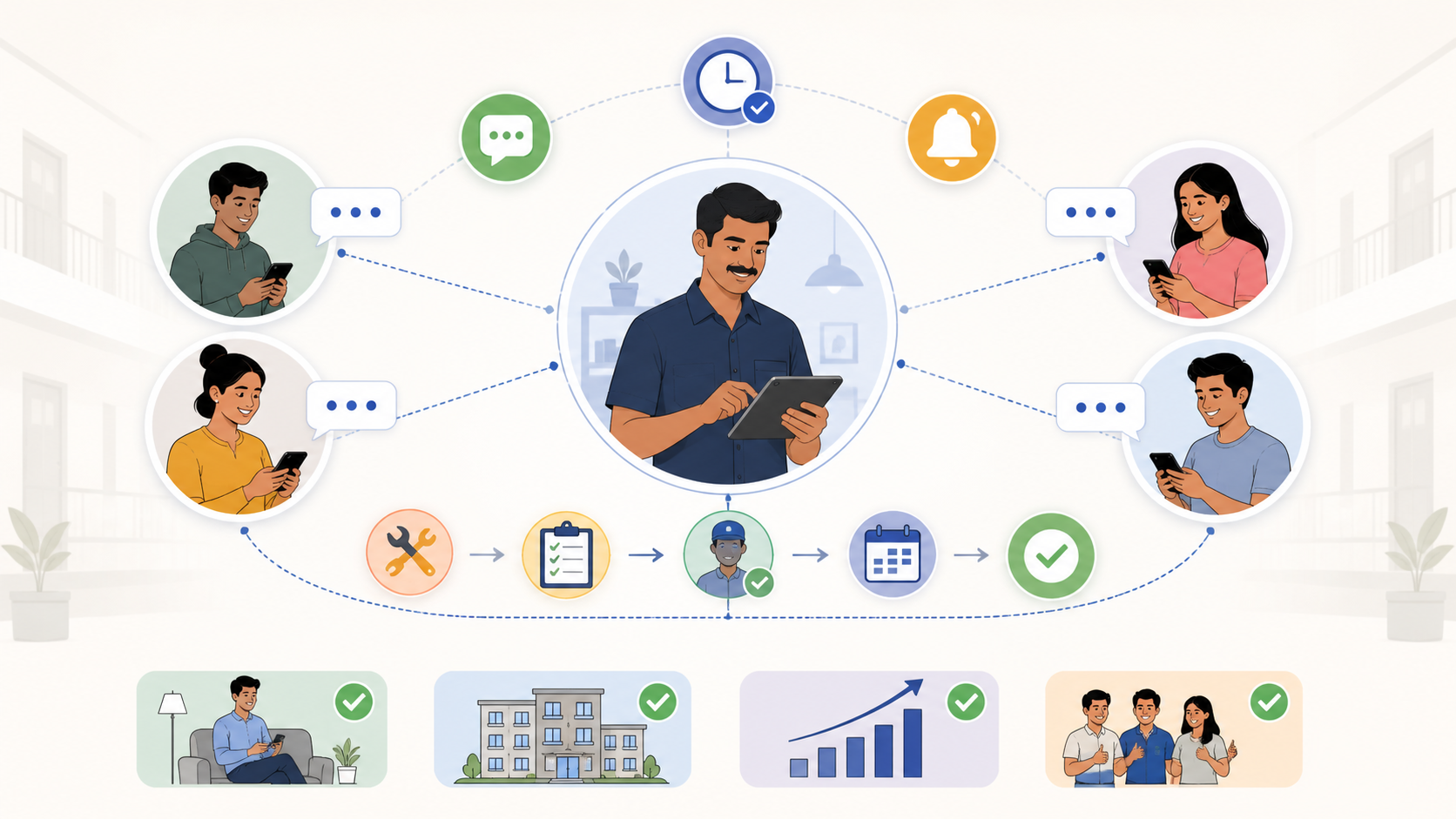
Caretaker performance is often judged informally, based on complaints or general perception. This approach misses patterns. Without structured tracking, you only see isolated issues, not recurring problems that actually affect operations.
To improve performance, you need measurable indicators that reflect daily execution. These metrics bring clarity to what is otherwise subjective.
Key metrics that matter include:
- Response time, which sets the tone for tenant interaction
- Resolution time, which reflects operational efficiency
- Repeat issues, which indicate whether problems are being properly solved
- Tenant feedback trends, which highlight consistent patterns
Tracking these helps you move from reactive management to structured improvement.
It allows you to:
- Identify gaps early before they escalate
- Improve training with specific focus areas
- Maintain consistent service quality across properties
Without tracking, improvement becomes guesswork. With it, performance becomes measurable and scalable.
Creating Accountability Without Micromanagement
Caretakers should not require constant supervision, but complete independence without structure leads to inconsistency. The challenge is not control, it is clarity.
System-driven accountability creates that balance. When expectations are clearly defined and progress is visible, caretakers can operate independently without losing alignment.
This includes:
- Clearly defined responsibilities and timelines
- Regular but structured check-ins focused on outcomes
- Visibility into tasks and issue status without constant follow-ups
When systems are in place, caretakers develop ownership naturally. They know what is expected and how to execute, reducing dependency on the owner.
Accountability, when structured correctly, creates consistency, not pressure.
Where Most PG Operators Go Wrong
Most operators intend to hire and train well, but execution gaps create recurring problems. These gaps may not feel critical initially, but over time they compound into inefficiencies that are difficult to fix.
Common mistakes include:
- Hiring quickly without defining the role, leading to confusion from day one
- Skipping structured training, resulting in inconsistent performance
- Relying on verbal instructions instead of documented processes
- Not tracking performance, making improvement difficult
These mistakes don’t always show immediate impact, but gradually lead to:
- Operational inefficiency
- Increased workload for the owner
- Declining tenant experience
The issue is not effort, it is lack of structure.
Building a Repeatable System for Caretaker Management
To scale your PG operations, caretaker performance cannot depend on individual capability alone. It needs to be system-driven. A repeatable system ensures consistency regardless of who is managing the property.
Instead of relying on experience alone, you create a framework that every caretaker follows.
A structured system includes:
- Clearly documented roles and responsibilities
- Standardized training for every new hire
- Defined SOPs for daily operations
- Measurable performance metrics and review cycles
This ensures:
- Consistency across properties
- Faster onboarding of new staff
- Reduced dependency on specific individuals
When the system is strong, scaling becomes easier, because you are enabling people to execute within a structure that already works.
How RentOk Helps You Bring Structure to Caretaker Operations
Managing caretaker performance manually becomes increasingly difficult as your PG grows. More tenants mean more interactions, more complaints, and more coordination, making it harder to maintain consistency without a structured system.
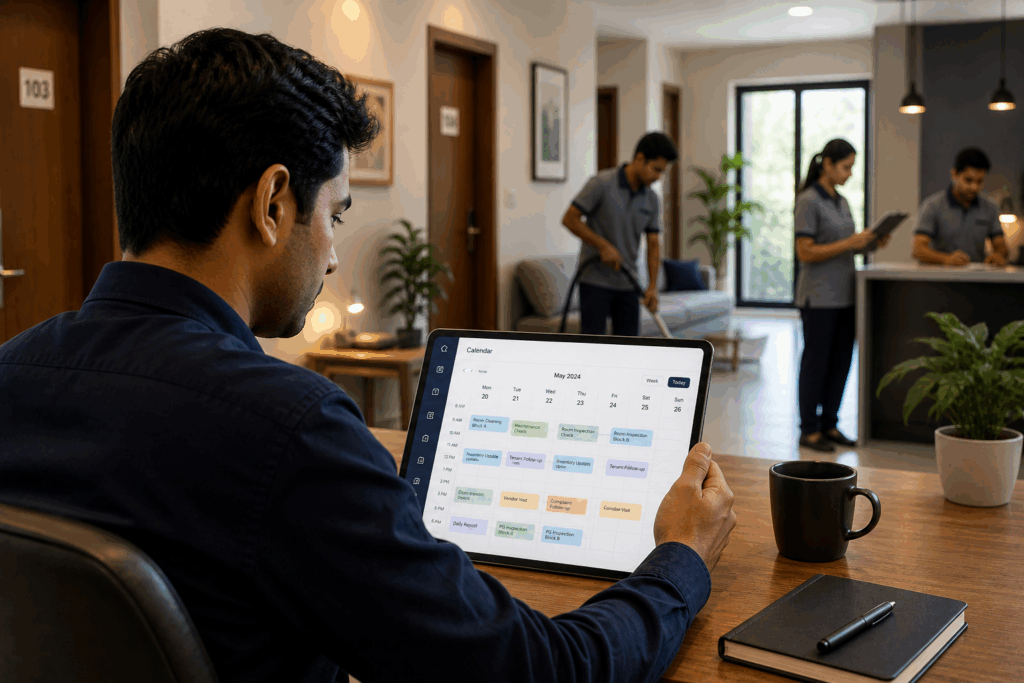
RentOk helps bridge this gap by bringing operational visibility and structure into your daily workflow. Instead of relying on verbal updates or scattered tracking, you can centralize how tasks, complaints, and communication are managed.
With RentOk, you can:
- Track tenant complaints and monitor resolution timelines, ensuring caretakers respond and close issues efficiently
- Maintain clear communication records, so there is no confusion about what was said or promised
- Monitor daily operational activity without constant follow-ups, reducing dependency on manual supervision
- Evaluate caretaker performance based on actual data rather than assumptions
This allows you to move from reactive management to a system where performance is visible, measurable, and improvable. Instead of chasing updates, you gain clarity, making it easier to maintain consistency across your property.
Conclusion: Building Operations That Don’t Depend on Luck
Hiring a caretaker is easy.
Building a caretaker system that consistently delivers results is not.
The difference lies in structure.
When hiring is intentional, training is standardized, and performance is tracked, the role becomes predictable. And when operations become predictable, growth becomes possible.
If your current setup still depends on informal hiring and on-the-job learning, inconsistencies are not accidental, they are built into the system.
The solution is not better people alone.
It is better systems supporting them.
Explore RentOk to discover how structured operations, clear visibility, and consistent processes can transform how your PG runs, so your team performs reliably, and your tenants experience the difference.