

Cost of Living in Pune for Freshers and Students
A useful starting budget for the cost of living in Pune is ₹15,000 – ₹25,000 a month if you share accommodation and keep spending controlled. Allow more for a private room, frequent deliveries or a cab-heavy commute. These are planning figures, not a city-wide average: your college or office location and accommodation package can change the result considerably.
Pune, Maharashtra’s second-largest city, combines educational institutions with major employment hubs, the district administration describes its educational identity as the “Oxford of the East”. For someone moving here, the practical question is what remains after rent, meals, travel and bills. This guide builds that budget, compares a PG with a shared flat, and explains how to weigh Pune against Bengaluru without overlooking move-in costs.
A realistic monthly budget in Pune
Use the ranges below as per-person planning allowances, not guaranteed quotes. The accommodation row assumes that you pay for food separately; if your PG package already includes meals, replace the relevant rows instead of adding a second full food budget. Deposits, tuition fees and major purchases sit outside these monthly totals.
| Expense | Frugal/shared lifestyle | Higher-spend lifestyle |
|---|---|---|
| Accommodation | ₹6,000–₹10,000 | ₹12,000–₹20,000 |
| Food and groceries | ₹3,000–₹5,000 | ₹8,000–₹12,000 |
| Transport | ₹500–₹1,500 | ₹2,000–₹5,000 |
| Utilities, internet and mobile | ₹1,000–₹1,500 | ₹2,500–₹4,000 |
| Personal needs, books and outings | ₹1,500–₹3,000 | ₹3,500–₹7,000 |
| Total of these allowances | ₹12,000–₹21,000 | ₹28,000–₹48,000 |
The lower column needs favourable rent, inexpensive meals and limited paid travel. The higher column represents a different routine, not the minimum cost of being comfortable. An ₹11,000–₹16,000 stretch budget may work with a subsidised hostel, an inclusive PG or family support, but leaves less room for surprises.
Is ₹20,000 enough for a fresher?
It can be, provided your actual accommodation and commute fit. On ₹35,000 take-home pay, spending ₹20,000 leaves ₹15,000 before savings, loan payments, family transfers and other commitments. On ₹30,000, it leaves ₹10,000. Calculate against take-home pay rather than CTC, and budget for the gap before your first salary.
Students should also list semester fees, exam charges, course materials and trips home on a separate annual calendar. Divide predictable irregular expenses by the months available to save for them. That reserve helps prevent a low ordinary-month total from hiding a large payment due next term.
PG or shared flat: compare the complete housing bill
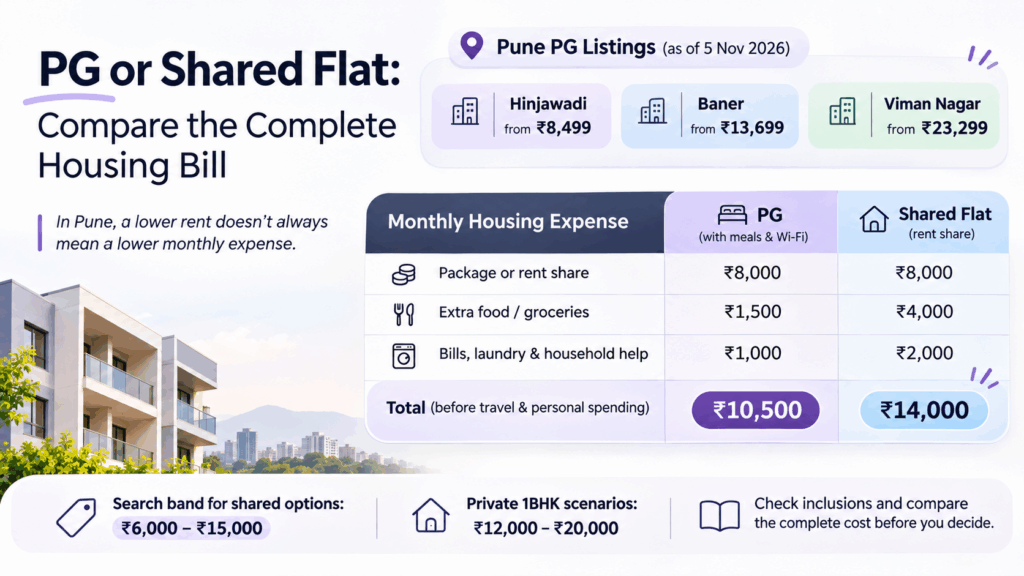
The lowest PG rent in Pune does not always produce the lowest monthly expense. Sharing type, food, housekeeping, Wi-Fi, electricity limits and location all matter. RentOK’s city-wise PG rent comparison explains why a bed price and a private-room price need separate treatment.
Asking prices checked on 5 November 2026 illustrate the spread: Stanza Living’s Pune listings show starting prices of ₹8,499 in Hinjawadi, ₹13,699 in Baner and ₹23,299 in Viman Nagar. These are advertised starting offers, not like-for-like rooms or confirmed availability. Budget ₹6,000–₹15,000 as a search band for some shared options, while recognising that managed or private accommodation can exceed it.
The same rent can lead to different totals
This illustrative comparison assumes an ₹8,000 PG package with regular meals and Wi-Fi, versus an ₹8,000 rent share in a flat. The flat may provide different privacy or facilities; the table does not treat the spaces as identical.
| Monthly housing-related expense | PG assumption | Shared-flat assumption |
|---|---|---|
| Package or rent share | ₹8,000 | ₹8,000 |
| Extra food / groceries and meals | ₹1,500 | ₹4,000 |
| Bills, laundry and household help | ₹1,000 | ₹2,000 |
| Subtotal before travel and personal spending | ₹10,500 | ₹14,000 |
Check every inclusion before copying either subtotal. A private 1BHK also means paying the whole rent: ₹12,000 outside a preferred area or ₹20,000 nearer a hub are possible budgeting scenarios, not verified city averages. Read RentOK’s PG-versus-flat cost comparison before choosing on headline rent alone.

Choosing an area around your actual destination
Start with your campus gate or office building, not just “Pune”. Hinjawadi’s different phases, an east-side office and a central college can require very different journeys. Test the route at your expected reporting and return times before paying a token.
- Wagholi and the Hinjawadi outskirts: Include these in a budget search when the route suits your destination. Lower rent can lose its advantage if you need daily autos or a long last-mile connection.
- Ravet and Kiwale: Consider these for a suitable PCMC-side routine. Do not assume that a lower-priced option here creates an economical commute to every Pune college or office.
- Undri: Compare the precise connection to your campus or workplace. Check the street, return journey and essential shops around the actual property.
- Baner, Kalyani Nagar and Koregaon Park: Expect a broad mix of offerings, including premium accommodation. Compare the same furnishing, sharing and service level rather than giving an entire neighbourhood one price.
- Kothrud: A useful search area for some west-side educational destinations, with both student accommodation and costlier flats. “Central” or “posh” does not describe every lane or room.
Independent homes and larger or premium flats can cross ₹20,000–₹40,000 monthly, but that whole-property figure should not become a per-bed estimate. Ask whether maintenance is extra and how roommates divide unequal rooms. A cheaper locality only helps when the complete routine works.
Food, travel and bills: the everyday costs
Will a ₹3,000 food budget cover every meal?
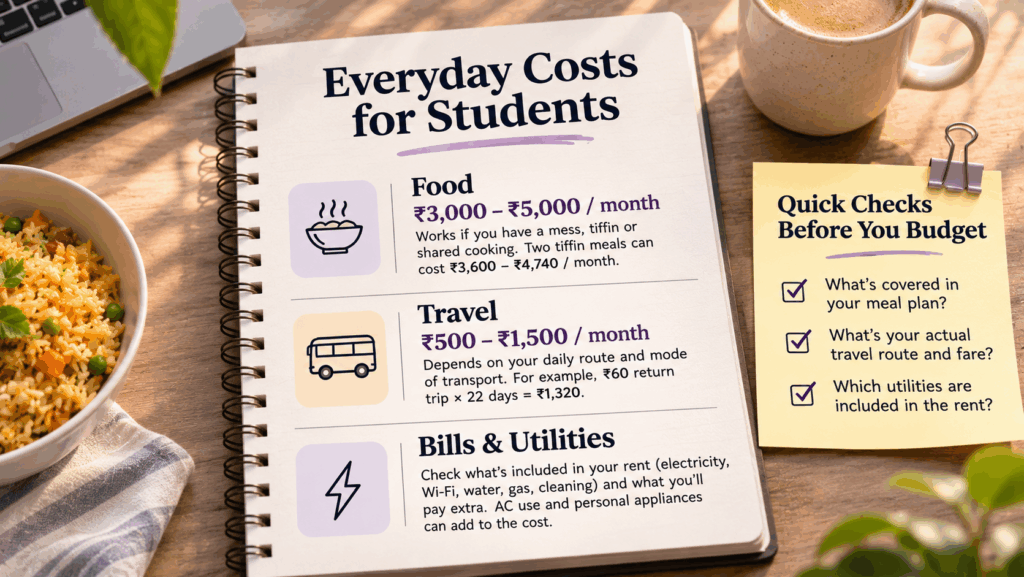
Only under the right arrangement. A subsidised mess, cooking with flatmates or a usable PG meal plan can keep costs down. A tiffin subscription covering lunch alone does not cover breakfast, dinner, snacks and weekend eating.
For a current provider example, Kamakshi Kitchen lists a ₹79 tiffin with a minimum 30-day plan totalling ₹2,370. Two such daily meals would cost ₹4,740 for 30 days before breakfast or extras. A ₹60 meal, where actually available, similarly costs ₹3,600 for two meals daily over 30 days.
Use ₹3,000–₹5,000 as a controlled-food planning allowance only after checking coverage. Frequent cafés and deliveries can push food spending towards the higher table. Test portions, delivery charges, service days and timing before subscribing; a meal you regularly miss becomes another purchase.
A short commute and clear bills protect the budget
A ₹500–₹1,500 travel allowance assumes considerable walking or an inexpensive public-transport routine. It may not cover a long daily bus-plus-auto journey. As an illustration, ₹60 in return travel across 22 days costs ₹1,320 before weekend trips.
Check current PMPML routes and fares for your journey. Eligible students can also check Pune Metro’s One Pune Vidyarthi Pass, which advertises a 30% ride discount; confirm eligibility, activation and route coverage before budgeting it.
Ask separately about electricity, Wi-Fi, water, gas, mobile recharges and cleaning. AC use and appliance ownership can change utility spending. RentOK’s guide to rent inclusions and extra charges helps distinguish facilities that exist from services your package actually includes.

Move-in cash sits outside the monthly budget
A manageable monthly expense does not guarantee an affordable move. You may need a deposit, advance rent, brokerage, bedding and temporary accommodation before receiving your salary or moving into a hostel. Keep refundable money separate from expenses, while recognising that you still need cash to fund it.
For example, an ₹8,000 package + ₹8,000 deposit + ₹2,000 moving/setup allowance needs ₹18,000 upfront. That does not cover every expense for the first month. These are assumptions, not a prescribed Pune deposit or joining charge.
Before committing, obtain written answers on:
- Deposit and deductions: Record the amount, refund procedure and accepted condition of the room. Do not finance your next move on an unconfirmed refund date.
- Brokerage and joining charges: Confirm the full amount, applicable taxes and payment trigger. RentOK’s rental-brokerage guide explains why one month’s rent is a quote to examine, not an automatic fee.
- Notice and lock-in: Check the minimum commitment, early-exit consequences and utility settlement. Use RentOK’s agreement-reading checklist to clarify terms before paying.
Build a separate buffer for medical needs, travel home and replacement essentials. A budget that spends every rupee on a normal month has little capacity for an unusual one.
Pune vs Bangalore: which is cheaper for your routine?
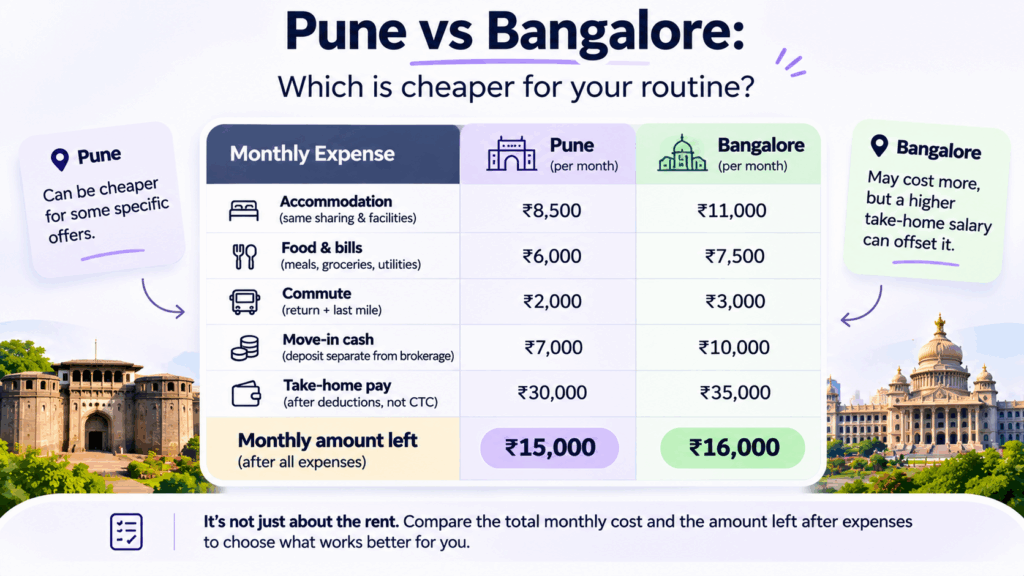
Pune can be cheaper for a particular offer, but the city name does not guarantee savings. Compare the same sharing type, food coverage and journey to work. A private room in a premium Pune property can cost more than a shared bed in an outer Bengaluru locality.
For context, Stanza Living’s Bengaluru page publishes standard-locality double-sharing guidance of ₹8,500–₹14,000. That overlaps some Pune offers; it is provider guidance rather than a representative comparison of both cities. The checked Pune listing prices also cover different properties and room categories.
Compare the money left after the move
Use written quotes to fill these categories for each city:
| Compare | Keep the basis consistent |
|---|---|
| Accommodation | Same sharing, furnishing and facilities |
| Food and bills | Include all compulsory charges and realistic extras |
| Commute | Return fare, last-mile transport and office days |
| Move-in cash | Deposit separately from brokerage and purchases |
| Take-home pay | Salary after deductions, not headline CTC |
If Pune costs ₹20,000 monthly and Bengaluru costs ₹23,000 under your own quotes, Pune saves ₹3,000. A ₹5,000 higher Bengaluru take-home salary would still leave ₹2,000 more there, before other differences. These are illustrative numbers, not city averages. Choose the routine and amount left that fit your priorities.
How RentOK helps make accommodation costs clearer
For students and freshers, a reliable budget starts with clear property charges and payment records. At participating properties, RentOK helps owners and managers organise the information behind those costs, making it easier to explain what residents pay for.
- Compare relevant room details: RentOK property websites can show rent, photos and facilities. Confirm the exact bed, sharing arrangement and package before using a displayed price in your budget.
- Keep charges and payments organised: Resident ledgers and payment history help teams review recorded rent and other dues. Ask for clarification when a charge does not match the agreed package.
- Track room categories consistently: Operators can maintain sharing types, rent and bed availability together, helping prospects enquire about the accommodation that fits their needs.
- Support regular payment administration: RentOK offers recurring bill addition, payment reminders and financial reports. These records help property teams manage collections; they do not set market rents or guarantee a resident’s savings.
RentOK supports property management rather than personal grocery budgeting or automatic flatmate bill-splitting. If you operate accommodation in Pune, use clearer records to explain the full package instead of advertising a rent figure that leaves mandatory extras unclear.
Conclusion
The most useful Pune budget starts with your actual accommodation and daily destination. ₹15,000–₹25,000 monthly can be a workable planning range for shared living, while private space, expensive food habits or regular cabs can take spending higher. Check inclusions carefully, keep deposits outside recurring expenses and leave room for the first month’s setup.
Before booking, compare the complete monthly cost, test the commute and obtain the financial and exit terms in writing. For PG and shared-accommodation operators, start your free trial on RentOK to organise room information, dues and payment records so residents can understand the costs behind their stay.
FAQ
1. What is a realistic monthly cost of living in Pune for students?
₹15,000–₹25,000 is a useful shared-living planning range, not a guaranteed city average. A subsidised hostel or inclusive PG may cost less, while private accommodation and frequent deliveries can raise spending. Exclude tuition and deposits when comparing monthly expenses.
2. Can a fresher live in Pune on ₹30,000 take-home pay?
It can work with controlled shared-living costs. If monthly spending reaches ₹20,000, ₹10,000 remains before savings, loan payments and family commitments. Check move-in cash separately, and avoid choosing rent based on CTC rather than actual take-home pay.
3. Is a PG cheaper than a shared flat in Pune?
An inclusive PG can cost less, especially when you would otherwise pay separately for meals, furnishings and cleaning. A well-priced established flat share may compete. Compare the full monthly bill and upfront setup, alongside privacy and responsibilities.
4. Which Pune areas should I check for a lower rent?
Include Wagholi, Ravet, Kiwale, Undri and suitable Hinjawadi outskirts in your search when they fit your destination. Prices vary within each locality; a lower rent may lose its advantage after last-mile travel and a longer daily commute.
5. How much should I budget for food in Pune?
₹3,000–₹5,000 can support a controlled arrangement, depending on cooking, mess access and package inclusions. Confirm how many meals a tiffin plan covers; add breakfast, snacks, missed service days and deliveries before treating its price as your entire food budget.
6. Is Pune always cheaper than Bengaluru?
No; the accommodation and routine decide the result. Compare matching room categories, food coverage, compulsory bills and travel. Then compare take-home salaries and move-in cash, because a cheaper city-level estimate does not necessarily leave you with more money.